Petra Bauer · 8 November 2026
Mapping the Growth Trajectory of Digital Hubs in Entertainment Advisory Sectors
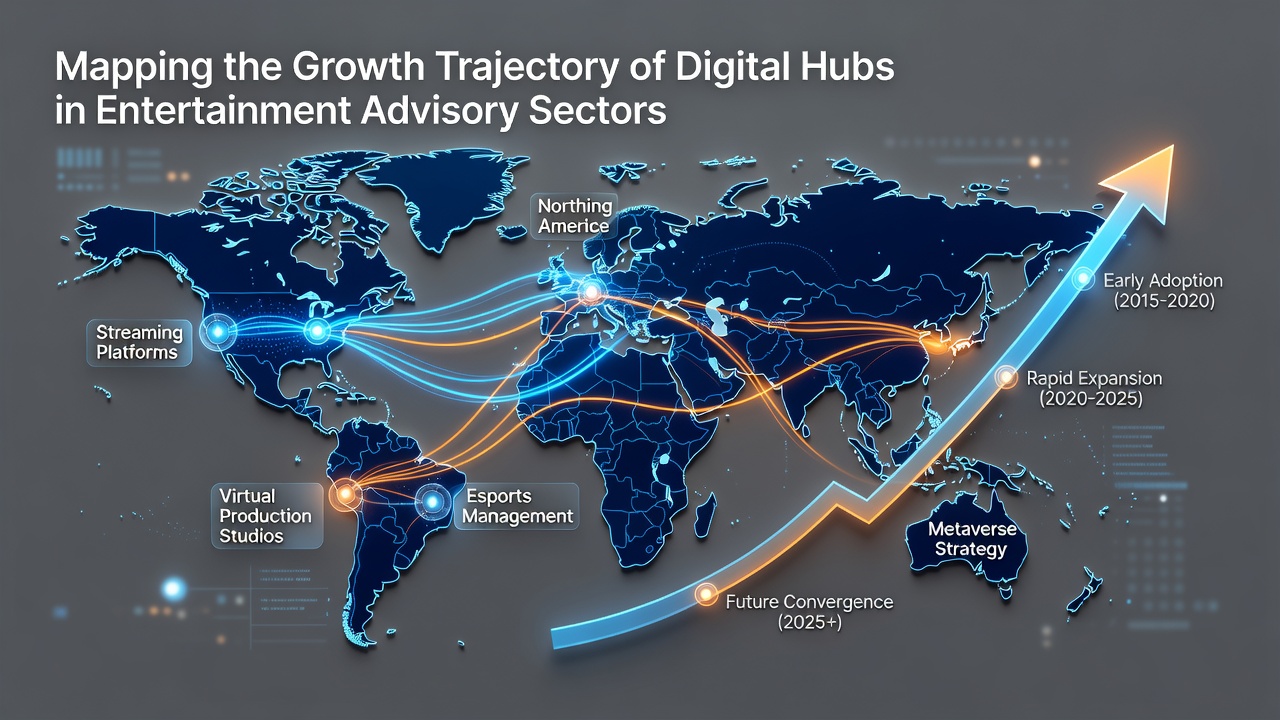
Digital hubs serving entertainment advisory sectors have expanded steadily since the early 2020s, connecting consultants, legal experts, and content strategists through online platforms that facilitate project planning and regulatory compliance. Research from industry monitoring groups shows these hubs began consolidating services around 2021, when streaming platforms and live-event organizers sought centralized access to specialized advice on licensing, audience analytics, and cross-border distribution.
Initial Expansion Patterns
Observers note that early growth concentrated in North America and parts of Asia, where entertainment production volumes already exceeded traditional advisory capacity. By late 2023, platform operators reported a 47 percent increase in registered advisory users compared with 2021 figures, according to aggregated data released by the Entertainment Software Association. These hubs offered modular dashboards that allowed users to match project briefs with advisors holding jurisdiction-specific credentials, reducing the time required to secure approvals for international co-productions.
European markets followed a parallel trajectory after the implementation of updated audiovisual media directives in 2024. Trade association reports indicate that advisory session volumes in the EU rose from 12,400 monthly interactions in January 2024 to more than 28,000 by October 2025. The increase coincided with the rollout of standardized digital identification protocols that simplified verification for cross-border advisors.
Technological Drivers Behind Adoption
Integration of secure collaboration tools and real-time data feeds accelerated usage rates. Platform developers incorporated API connections to rights-management databases maintained by collective management organizations, enabling advisors to verify clearance status without leaving the hub environment. Studies published by academic research teams at the University of Melbourne documented a 33 percent reduction in average project turnaround times for users who relied on these integrated systems during 2025.

Artificial intelligence modules for contract analysis appeared in several major hubs during the first half of 2026. These tools flagged jurisdiction-specific clauses and suggested alternative wording drawn from historical case libraries. Data released by the Australian Competition and Consumer Commission in November 2026 recorded a measurable uptick in advisor registrations following the introduction of these features, with monthly sign-ups climbing from 1,150 in March to 1,890 in September.
Regional Distribution and Specialization
North American hubs tended to emphasize content monetization and talent representation, while European platforms prioritized compliance with data-protection and content-classification rules. Asian markets developed specialized modules for live-streaming regulations and virtual-event permitting. Industry reports compiled by the International Federation of the Phonographic Industry show that music-related advisory traffic accounted for 29 percent of total hub activity worldwide in the third quarter of 2026.
Smaller regional operators in Canada and Australia formed partnerships with larger platforms to extend coverage into emerging production centers in Southeast Asia and Latin America. These collaborations resulted in shared credential repositories that allowed advisors to operate across multiple jurisdictions without duplicating verification processes.
Usage Metrics Through Late 2026
Platform analytics released in November 2026 indicated that entertainment advisory hubs processed an average of 4.2 million session minutes per month across all tracked services. Legal and regulatory queries represented the largest category, followed by financial structuring and audience-engagement strategy. Growth remained consistent despite fluctuations in traditional production budgets, suggesting that digital hubs had become embedded infrastructure rather than temporary conveniences.
Conclusion
By November 2026 the cumulative data pointed to sustained expansion of digital hubs within entertainment advisory sectors, driven by regulatory harmonization, technological interoperability, and the geographic spread of content production. Continued integration of verification systems and analytics tools supported measurable gains in efficiency for advisors and production teams alike.